David Ciarla
Lesson Foundation
Lesson title: Adaptations Performance Task
Unit Title: Future Adaptations Lesson sequence: culminating project
Grade Level: Fifth grade Time allotted: 6-8 weeks (30 min. daily)
Subject Area: Science and Literacy
Standards:
Explain the relationships or interactions between two or more individuals, events, ideas, or concepts in a historical, scientific, or technical text based on specific information in the text.
S:ESS1:8:2.2 Use geological evidence provided to support the idea that Earth’s crust/lithosphere is composed of plates that move.
S:LS3:4:1.2 Provide examples of how an organism’s inherited characteristics can adapt and change over time in response to changes in the environment.
Big Ideas:
Earth’s landforms are changing and constantly being shaped
Changes can happen abruptly or over time
Climate is dependant upon the location
The composition of the Earth below the surface causes change.
Essential Question: How will the changing face of the Earth affect the animals of our planet?
The Task
Objective one (Formative task): Given a future Earth scenario and a present day animal, students will describe how the creature will survive in the future. Students will explain how it is specially adapted to survive in the biome created by the shifting earth.
Objective two (Summative task): Students will create a visual presentation of the animal they create that is specially adapted to a chosen biome. The visual will include a poster board display as well as a 3D model.
Objective three (Summative task): Given an audience of peers, students will effectively explain the need for specific adaptations and the reasons behind the change in the biome as it relates to shifting of tectonic plates.
Exemplars
|
 Excellent presentation
Developing toward expectations
Checklist
Tasks
Did you…..
|
yes it is done
|
yes and it is my best
|
take notes while watching the continental drift video
|
|
|
read about 3 or more biomes on the WebQuest
|
|
|
take notes about the biome you have chosen
|
|
|
fill out the adaptations table
|
|
|
create a display that meets all requirements
|
|
|
create a 3D model that meets all requirements
|
|
|
practice your presentation and get peer feedback
|
|
|
Rubric
|
CATEGORY
|
Exceeds Expectations
4pts.
|
Meets Expectations
3pts.
|
Developing toward expectations 2pts
|
Well Below Expectations 1pt.
|
Knowledge Gained
|
All questions related to facts and processes used to create the creature are clearly displayed in the final product.
|
Student can accurately answer questions related to facts and processes used to create the creature.
|
Student can accurately answer some of the questions related to facts and processes used to create the creature.
|
Student appears to have insufficient knowledge about the facts or processes used to create this creature.
|
Attractiveness
|
The final product is exceptionally attractive in terms of design, layout, and neatness.
|
The final product is attractive in terms of design, layout and neatness.
|
The final product is acceptably attractive though it may be a bit messy or missing a part.
|
The final product is distractingly messy or very poorly designed. It is not attractive.
|
Labels
|
All items of importance on the project are clearly labeled in a way that enhances the look of the project.
|
All items of importance on the poster are clearly labeled.
|
Some items of importance on the poster are clearly labeled.
|
Labels are too small to view OR not enough important items were labeled.
|
Content - Accuracy
|
All facts about the biome are accurate and thorough.
|
All facts about the biome are accurate.
|
One or two inaccurate or unverified facts are used.
|
Several facts are inaccurate or unverified.
|
Originality
|
The project reflects an exceptional degree of student creativity in their creation and/or display.
|
The creature you created was one of a kind.
|
Your creature is not that much different than the creatures we have seen.
|
The creature is nearly the same as creatures we have seen.
|
Use of Class Time
|
Used time well during each class period. Focused on getting the project done. Never distracted others.
|
Used time well during each class period. Usually focused on getting the project done and never distracted others.
|
Used some of the time well during each class period. There was some focus on getting the project done but occasionally distracted others.
|
Did not use class time to focus on the project OR often distracted others.
|
Sources
|
In addition to the links provided your project uses information from additional websites.
|
You used all the links provided to you to research your project.
|
You only used one of the sites to research your facts.
|
You did not get your information from any sources.
|
Total Rubric Score:
|
|
II. Lesson Body
Introduction:
Humans will not be around forever. When we are gone who will take our place? What will the Earth be like and which species will adapt to the changes the best. During this WebQuest adventure you will have a chance to learn about the processes that continuously change the Earth and those that will reshape the Earth in the future. You will study plate tectonics, biomes, and animal adaptations in order to understand what the future will bring.
Teaching Procedures:
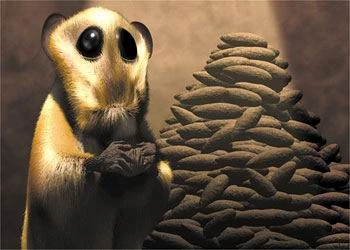
Watch clips of The Future is Wild documentary to introduce the future animals concept
Guide students to the WebQuest where they will follow instructions to
watch a video explaining continental drift video
read about three different biomes
take notes on these biomes
choose one to study further
identify a present day animal they would like to work with
list the adaptations it will need to survive in the future biome
Lesson on identifying key information for a poster board
Students will work independently on their poster boards
demonstrate how to paper mache a 3D animal
students independently create 3D models
Closure: Students will present projects to other classes scheduled throughout the day.
III. Lesson Essentials
Differentiated Learning:
Content: By using the WebQuest model, the students will be able to navigate through a learning path that is specific to their needs.
Process: Student choice will allow each student to choose a biome and animal that meets both their interest and ability level. For example, it may be easy to adapt a fish to a future biome since it will likely still be in the ocean, but adapting an alligator to an arctic climate may be more difficult.
Product: The students will have the opportunity to demonstrate their learning in many different ways: verbally (presentation), written (adaptations template), creative (3D model), and with a visual presentation.
Learning Environment: The students will have the opportunity to work on the computer, in pairs, small group, on paper and to work hands-on with the 3D model.
Materials:
Technology
The Future is WIld DVD
My WebQuest
TeacherTube videos on continental drift and biomes
Supplies
poster boards
flour
paint
various cups, pipe cleaners etc.